This Is What Happens When Davao’s Festivals Hit Instagram Mode
You know that feeling when a place surprises you in the best way? Davao, Philippines, did exactly that during its festival season. I didn’t expect color, rhythm, and culture to explode like fireworks through the streets. From vibrant street dances to glowing lantern parades, every moment felt like a curated scene made for sharing. If you’re chasing authentic, instagram-worthy magic, Davao’s festival energy is real—and it’s waiting to be experienced. Let me show you how it all comes together.
The Pulse of Kadayawan: Davao’s Festival Identity
Davao’s soul beats loudest during the Kadayawan Festival, an annual celebration held every August that honors the city’s rich cultural mosaic and bountiful harvests. More than just a tourist attraction, Kadayawan is a heartfelt expression of gratitude from the indigenous communities—such as the Bagobo, Matigsalug, and Manobo—who have long called this fertile region home. The word 'Kadayawan' itself means 'to celebrate with blessings,' and that spirit radiates through every dance, float, and floral display. It is not a performance for outsiders, but a living tradition passed down through generations, now shared with respectful visitors who come to witness its splendor.
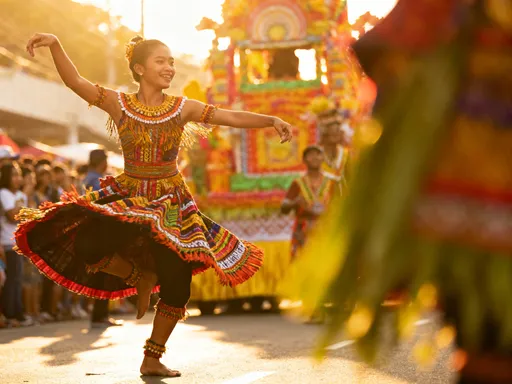
At the heart of the festival is the Indak-Indak sa Kadalanan, a vibrant street dance competition that transforms Roxas Avenue into a pulsing river of movement and color. Dancers from various barangays (neighborhoods) take the stage in elaborate costumes adorned with feathers, beads, and handwoven textiles. Their choreography draws from ancestral rituals—honoring nature, the earth, and the gods of harvest. Each troupe tells a story through motion, whether it’s mimicking the flight of birds over Mount Apo or reenacting the planting of rice in terraced fields. These aren’t just performances; they are visual prayers, rendered in rhythm and costume, that connect the present to a deep cultural past.
Equally striking are the harvest floats, known as 'Pamulak sa Kadayawan,' which roll through the city like mobile gardens. Crafted from fresh fruits, vegetables, flowers, and native materials, these floats celebrate Davao’s identity as the 'Durian Capital of the Philippines' and a hub of agricultural abundance. You’ll see towering displays of pomelos, bananas, and of course, durians—some so large they seem sculpted by nature herself. The craftsmanship is meticulous, with farmers and artists collaborating to create works that are both festive and deeply symbolic. For travelers, these moments offer a rare glimpse into a culture that reveres the land not just as a resource, but as a giver of life.
What makes Kadayawan truly special for modern travelers is how authenticity amplifies its visual power. Unlike manufactured tourist spectacles, this festival doesn’t exist to be photographed—it exists to be lived. And yet, because of its sincerity, it becomes even more compelling through the lens. When you capture a dancer mid-leap, her face painted with traditional motifs, or a child laughing beside a float piled high with mangoes, you’re not just taking a picture. You’re preserving a moment of genuine cultural pride. That authenticity resonates with audiences online, making Kadayawan not only beautiful to witness but meaningful to share.
Chasing Golden Light: Best Times and Spots for Festival Photography
If you’re aiming to capture Davao’s festival magic in its most radiant form, timing and location are everything. The golden hours—shortly after sunrise and just before sunset—transform the city into a canvas of warm, diffused light that enhances every shot. During Kadayawan, the early morning offers a rare quiet before the streets fill with energy. Arrive at San Pedro Cathedral around 6:00 AM, and you’ll find locals laying floral offerings in preparation for the day’s events. The soft morning glow reflects off the stone steps and stained glass, creating serene, contemplative images that contrast beautifully with the day’s later intensity.
As the sun climbs, shift your focus to Roxas Avenue, the main artery of the festival parade. This is where the Indak-Indak sa Kadalanan unfolds, and while the midday sun can be harsh, there are ways to work with it. Position yourself on the north side of the avenue to avoid direct overhead glare, and use the shadows creatively—framing dancers as they move between light and shade. Wide-angle lenses help capture the scale of the procession, while telephoto shots allow you to isolate expressions: a drummer lost in rhythm, a child watching in awe from a parent’s shoulders. If possible, scout the route a day in advance to identify landmarks—like the fountain near City Hall—that can serve as strong visual anchors in your compositions.
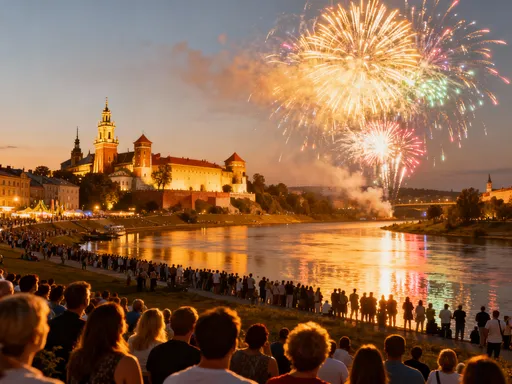
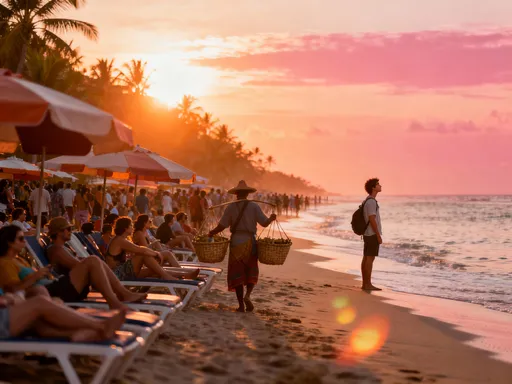
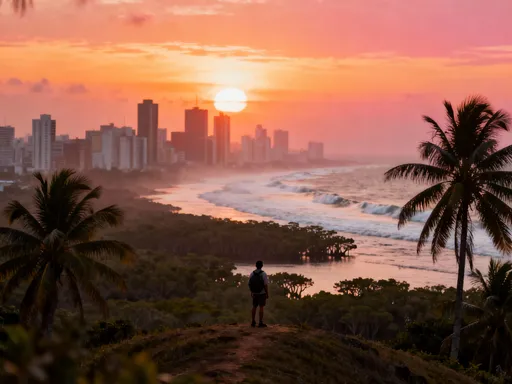
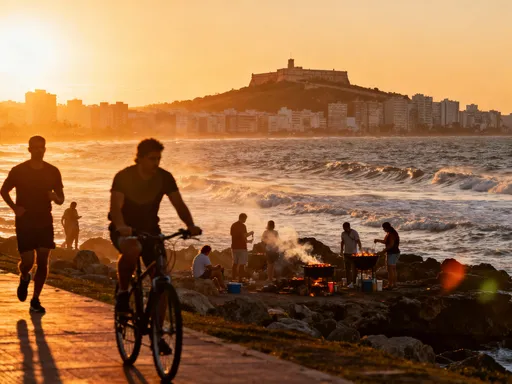
But the true photographic magic happens at dusk. As the sun dips behind Mount Apo, the Davao Riverfront becomes one of the city’s most enchanting backdrops. The river mirrors the fading sky, and the lantern-lit walkways glow like strings of stars. This is the perfect setting for the 'Araw ng Dabaw' evening celebrations, where families gather for music, food, and cultural shows. Use a tripod or stabilize your phone to capture long exposures of floating lanterns or light trails from passing boats. The ambient warmth of string lights and food stalls adds depth and texture to your shots, making even casual snapshots feel cinematic.
Another hidden gem is People’s Park, especially during the 'Glow Kadayawan' segment when thousands of lanterns illuminate the gardens. Arrive by 6:30 PM to secure a good vantage point, and experiment with silhouettes against the lit-up fountain. The park’s open layout allows for both wide group shots and intimate close-ups of festival-goers enjoying the evening. Remember to be mindful of personal space—avoid blocking pathways or disrupting family moments. The best festival photography doesn’t intrude; it observes with respect. With a little preparation and a lot of presence, you’ll come away with images that don’t just document the festival—they tell its story.
Dressing the Part: How Local Fashion Elevates Your Festival Vibe
One of the most powerful ways to connect with Davao’s festival spirit is through what you wear. While casual attire might be comfortable, dressing with cultural intention can transform your experience—and your photos—from ordinary to extraordinary. During Kadayawan, many locals wear traditional and semi-formal Filipino garments that reflect both heritage and pride. For women, the 'kimona' paired with a 'patadyong' skirt—often made from abaca or banana silk—adds a touch of elegance rooted in Mindanao’s weaving traditions. Men may don the 'barong Tagalog,' but with a regional twist: lighter fabrics, earth-toned embroidery, or indigenous patterns inspired by tribal tattoos.
Indigenous-inspired fashion plays a central role in the festival’s visual language. You’ll see intricate beadwork, feathered headdresses, and hand-dyed textiles featuring motifs like the 'okir'—a flowing, curvilinear design symbolizing strength and continuity. These elements aren’t costumes; they are expressions of identity. As a visitor, wearing even a small piece—like a woven bracelet or a floral crown made from local sampaguita and anahaw leaves—can deepen your connection to the celebration. It shows respect and appreciation, and it often opens doors to conversation with locals who are happy to share the meaning behind their attire.
For those looking to incorporate authentic fashion into their festival wardrobe, the best place to start is at local markets and artisan hubs. The Gaisano Country Mall and the Davao City Hall grounds during Kadayawan host pop-up stalls where indigenous cooperatives sell handcrafted accessories. Look for pieces labeled as made by the T’boli, Mandaya, or Lumad communities—these are not only beautiful but support sustainable livelihoods. Avoid mass-produced souvenirs that mimic cultural symbols without context. Instead, invest in something meaningful: a small bag woven from tikog grass, a necklace with capiz shell pendants, or a scarf dyed with natural pigments.
When wearing traditional elements, the key is respect. Don’t treat sacred symbols—like tribal tattoos or ceremonial headdresses—as mere props. Avoid full regalia unless invited to participate in a performance. Instead, blend local touches with your own style: pair a modern dress with a handwoven shawl, or wear a barong-inspired shirt with jeans. This approach allows you to honor the culture without overstepping. And in your photos, the result is striking: you’re not just a spectator, but a participant in the festival’s living story. Your images gain depth, warmth, and a sense of belonging that resonates far beyond the screen.
Beyond the Parade: Hidden Festival Moments Worth Capturing
While the grand parades and dance competitions draw the biggest crowds, some of the most powerful festival moments happen quietly, away from the spotlight. These are the scenes that often leave the deepest impression—fleeting, unscripted, and full of heart. Early one morning, I found myself at San Pedro Cathedral as elderly women arranged garlands of sampaguita and gumamela around the statue of San Pedro, the city’s patron saint. The air was cool, the scent of flowers thick, and the only sound was the soft rustle of leaves. No one was performing; they were simply honoring a tradition that has endured for decades. I took only a few photos, but they remain among my most cherished—proof that reverence often speaks louder than spectacle.
Another unforgettable moment came during a visit to a barangay rehearsal hall in Tugbok District. Behind closed doors, young dancers—some as young as eight—were practicing their routines under the guidance of elders. Sweat glistened on their faces, but their focus was absolute. The room buzzed with energy, not from amplifiers, but from the beat of homemade drums and the rhythm of feet on wooden floors. I was invited to watch, not to photograph, but after a respectful conversation with the coordinator, I was allowed to capture a few frames. Those images—of concentration, discipline, and intergenerational teaching—carry a truth that staged performances sometimes miss. They show culture not as entertainment, but as education, as legacy.
Equally moving are the family gatherings that unfold in neighborhood plazas during the festival. In the late afternoon, after the official events wind down, communities come together to share meals, play music, and simply be. I remember sitting on a bench in Bucana Park, watching a grandmother teach her granddaughter how to weave a simple flower crown. A portable speaker played traditional kulintang music, and children chased each other around a banyan tree. No hashtags, no filters—just joy. These moments don’t always make it to social media, but when they do, they stand out. They remind us that festivals are not just about what we see, but about how we feel when we’re part of something bigger.
For travelers seeking authentic content, these offbeat experiences are gold. They offer storytelling opportunities that go beyond aesthetics. A photo of a wrinkled hand placing a flower on an altar speaks of devotion. A video of children laughing during a game of 'tumbang preso' captures the festival’s generational heartbeat. These scenes don’t require perfect lighting or expensive gear—they require presence, patience, and permission. When you approach them with humility, you’re not just capturing moments; you’re honoring them. And in a world saturated with curated images, that kind of authenticity is what truly resonates.
Sensory Layers: How Sound, Smell, and Taste Fuel Visual Appeal
Festival photography isn’t just about what you see—it’s about what you hear, smell, and taste. These sensory layers enrich your visual experience and add depth to your storytelling. In Davao, the soundtrack of Kadayawan is as vital as its colors. The deep, resonant beat of the 'agung'—a set of large, suspended gongs—rumbles through your chest during performances. The high-pitched rhythm of bamboo percussion, the call-and-response chants of dancers, and the laughter of children chasing balloon vendors all contribute to a soundscape that brings your images to life. When you record short reels or videos, consider keeping the natural audio. That background hum of culture turns a simple clip into an immersive memory.
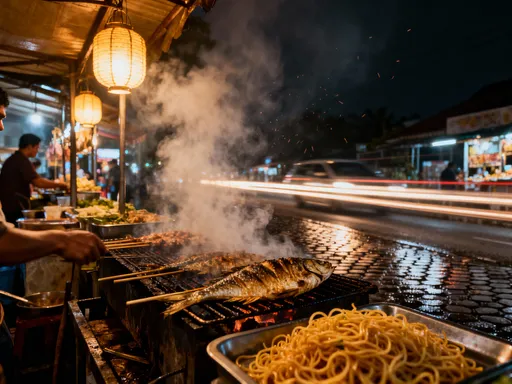
Then there’s the scent of the festival—something no photo can capture, but every traveler remembers. The sweet perfume of sampaguita garlands hangs in the air, especially near churches and performance areas. It mingles with the earthy aroma of damp soil after a sudden rain, the smoky tang of grilled street food, and the citrusy zing of calamansi being squeezed over fresh seafood. These smells anchor your memories, and when you later view your photos, they trigger a flood of sensory recall. Try pairing a still image of a food stall with a short audio clip of sizzling pork barbecue or a vendor calling out prices. That combination creates a richer, more evocative narrative.
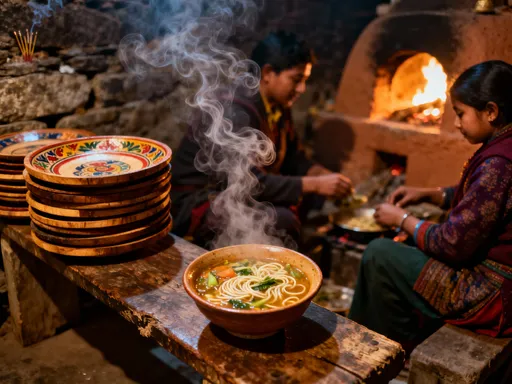
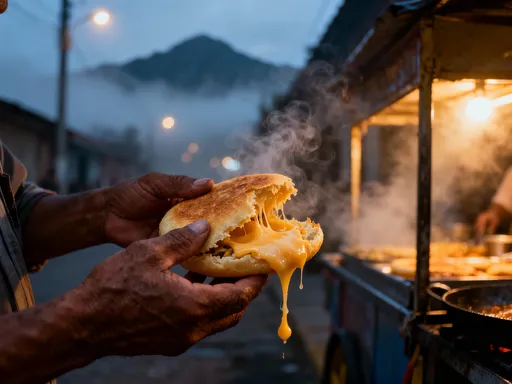
And of course, there’s the taste. Davao’s festival season is a culinary celebration in its own right. From 'durian candies' to 'marang jam,' the local flavors are as bold as the visuals. Street vendors line the avenues with skewers of 'inasal' chicken, plates of 'kare-kare' with crunchy peanut sauce, and glasses of 'buko juice' served in coconut shells. Don’t just photograph the food—eat it. Share a plate with a local family, try something unfamiliar, and let your taste buds guide your curiosity. When you post a photo of a steaming bowl of 'linarang' soup, add a caption that describes its sour, spicy kick. That personal touch transforms your content from pretty to personal.
By engaging all your senses, you create a more complete story—one that invites your audience not just to look, but to imagine themselves there. A video of dancers under fairy lights is beautiful, but when paired with the sound of drums and the faint smell of grilled meat on the breeze, it becomes transportive. That’s the power of sensory storytelling. It turns your social feed into a window, not just a gallery.
Smart Sharing: Capturing Culture Without Exploitation
In the age of Instagram, it’s easy to fall into the trap of treating culture as content. But responsible travel photography means more than just getting the perfect shot—it means doing so with integrity. Davao’s festivals are not performances for the camera; they are expressions of identity, history, and community. As a visitor, your role is to observe, appreciate, and share with care. That starts with asking permission. If you want to photograph someone in traditional attire, especially elders or performers, a simple smile and a gesture toward your camera can go a long way. Many will say yes, especially if you take a moment to chat first. And if they decline, respect their choice without argument.
Avoid staging scenes or asking people to 'do something traditional' for your photo. Authenticity is lost the moment a moment is forced. Instead, wait for natural interactions—children playing, families praying, dancers resting between sets. These unposed moments often carry more emotional weight than any directed shot. And when you do capture someone’s image, consider giving back. A printed photo, shared later via social media or even mailed if possible, can be a meaningful gift. Some travelers carry small Polaroid cameras for this very purpose, handing out instant prints as tokens of gratitude.
Equally important is context. When you post a photo, don’t just describe what you see—explain what it means. Instead of writing 'Beautiful dancer in Davao!' try 'This Bagobo performer honors her ancestors through the Indak-Indak dance, a tradition passed down for generations.' That small shift turns a superficial image into an educational moment. It shows your audience that culture is not a backdrop, but a living, breathing heritage.
Finally, be mindful of sacred spaces and private moments. Churches, ancestral altars, and family gatherings are not photo ops. If signs request silence or no photography, obey them without question. Your respect will be noticed—and appreciated. Ethical storytelling isn’t about limiting your creativity; it’s about deepening it. When you honor the people behind the pictures, your content gains not just beauty, but soul.
Why Davao Stays With You—And Should Be on Your List
Davao’s festivals don’t end when the parades do. They linger—in your photos, in your memories, in the way you see the world a little differently afterward. What makes Kadayawan so unforgettable isn’t just its visual splendor, but its spirit of gratitude, unity, and resilience. It’s a celebration rooted in the land, shaped by generations, and shared with open hearts. For women in their thirties to fifties—many of whom balance family, work, and personal dreams—this kind of travel offers more than escape. It offers connection. It reminds us that joy can be communal, that traditions can be both ancient and alive, and that beauty often blooms in the most unexpected places.
In a world where travel can sometimes feel transactional—book a flight, visit a landmark, take a selfie—Davao invites you to slow down, to listen, to participate. It challenges you to move beyond the surface and engage with culture in a way that’s meaningful, not just memorable. Whether you’re dancing beside a float, sharing a meal with a local family, or simply watching the lanterns drift down the river, you’re not just witnessing a festival. You’re becoming part of its story.
And that’s the kind of experience that stays with you. It shows up in quiet moments—when you hear a drumbeat in a movie, or smell jasmine on a summer breeze, or see a child twirl in a handmade crown. It reminds you that the world is full of color, not because it’s staged for cameras, but because people choose, every day, to celebrate life.
So if you’re planning your next journey, consider Davao. Not for the likes, not for the followers, but for the feeling. Pack your camera, but also your curiosity. Bring your sense of wonder, and leave with a heart full of stories worth sharing. Because some places don’t just change your feed—they change you.